Custom Business Systems Portfolio application

Tessera Multi-Tenant Ledger Platform

A multi-tenant financial operations platform demonstrating organization-scoped accounts, balance visibility, idempotent transfers, transaction history, and role-aware workspace access.

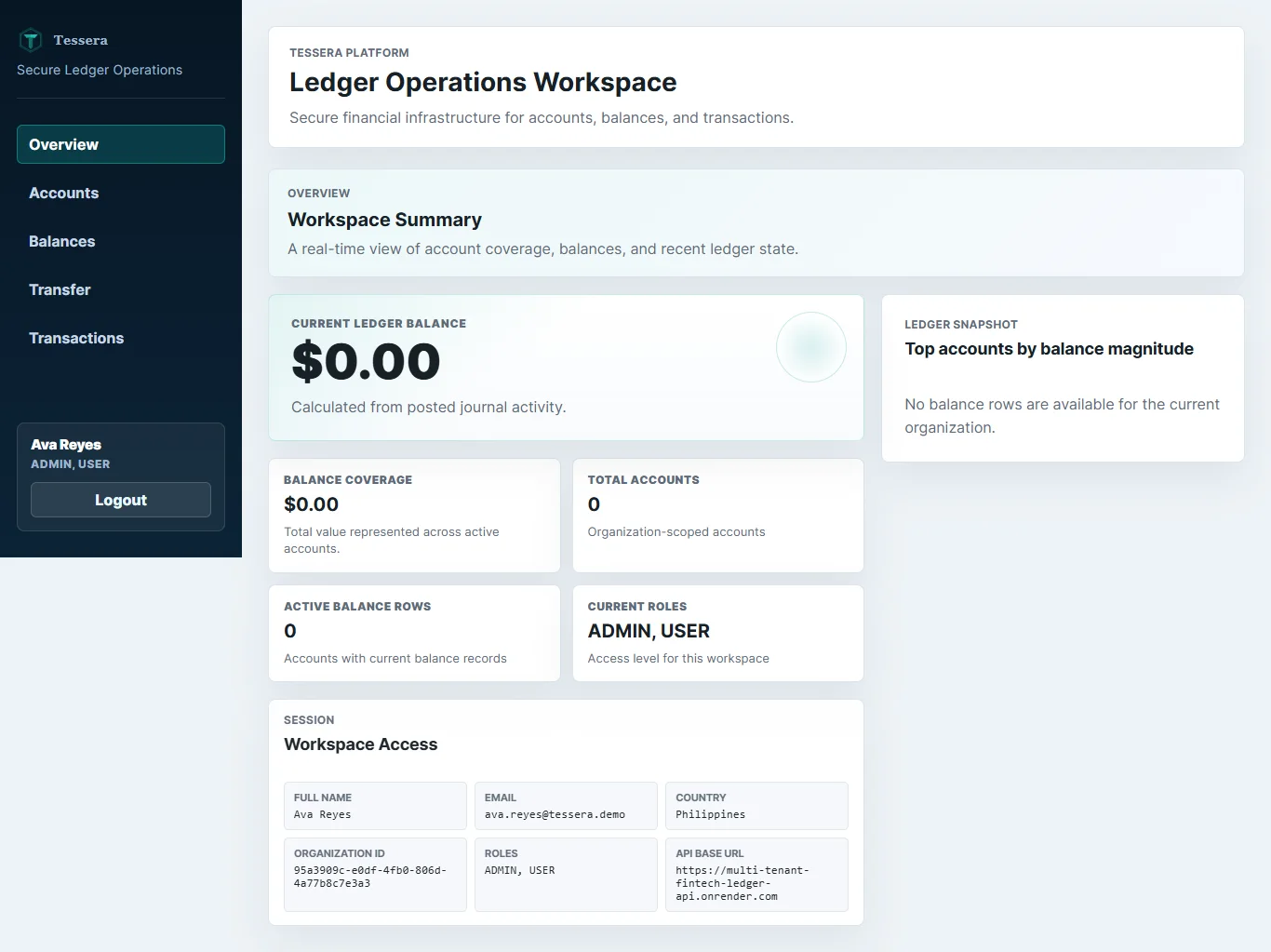
Tessera organization-scoped ledger operations workspace overview

Project context

Compact project facts.

Industry

Financial Operations / Fintech Infrastructure

Company size

Multi-tenant SaaS product concept

Project type

Ledger operations and account management platform

Service line

Custom Business Systems

Status / reference

Portfolio application

Before

Before the build

Financial records need explicit tenant, account, posting, authorization, and retry rules rather than generic balance updates.

Financial records can become inconsistent when transfers are treated as generic updates.

Tenant data can leak when organization scope is not enforced consistently.

Balances become unreliable when derived state is updated outside transactions.

Duplicate requests can create repeated postings.

Account classifications and journal history need one reliable model.

Role-based access must be enforced beyond frontend navigation.

Build

What was built

Delivered scope

  • Authenticated, organization-scoped workspace
  • Role-aware navigation and workspace access details
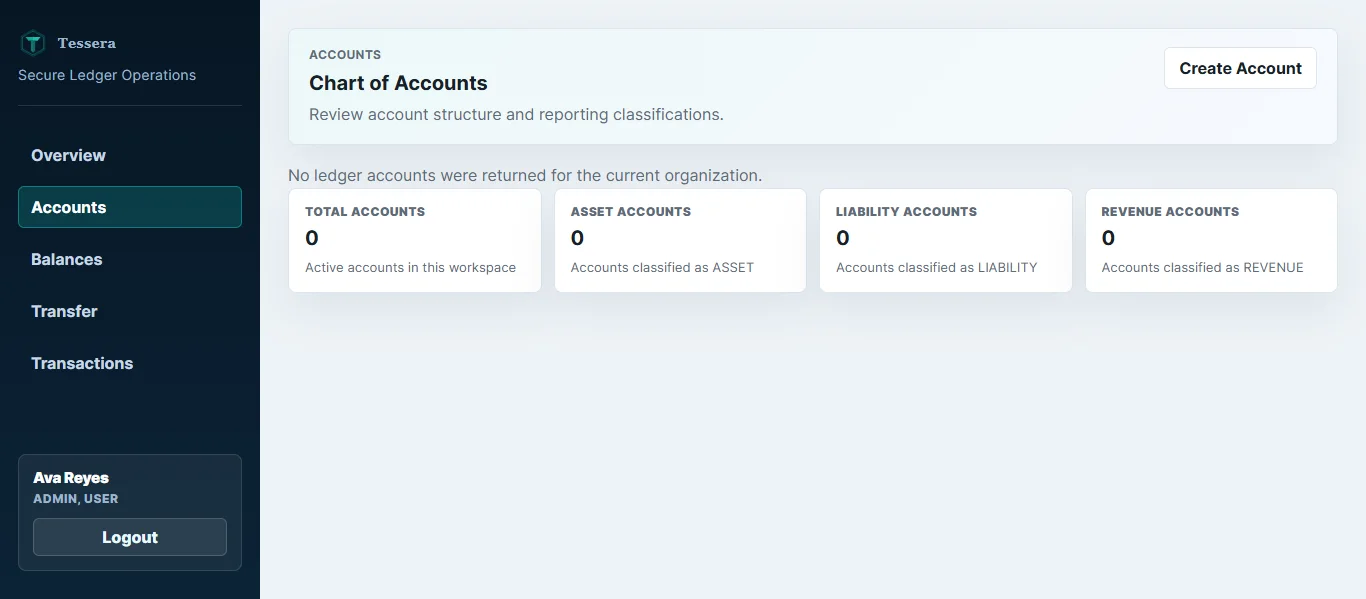
  • Account management and chart of accounts
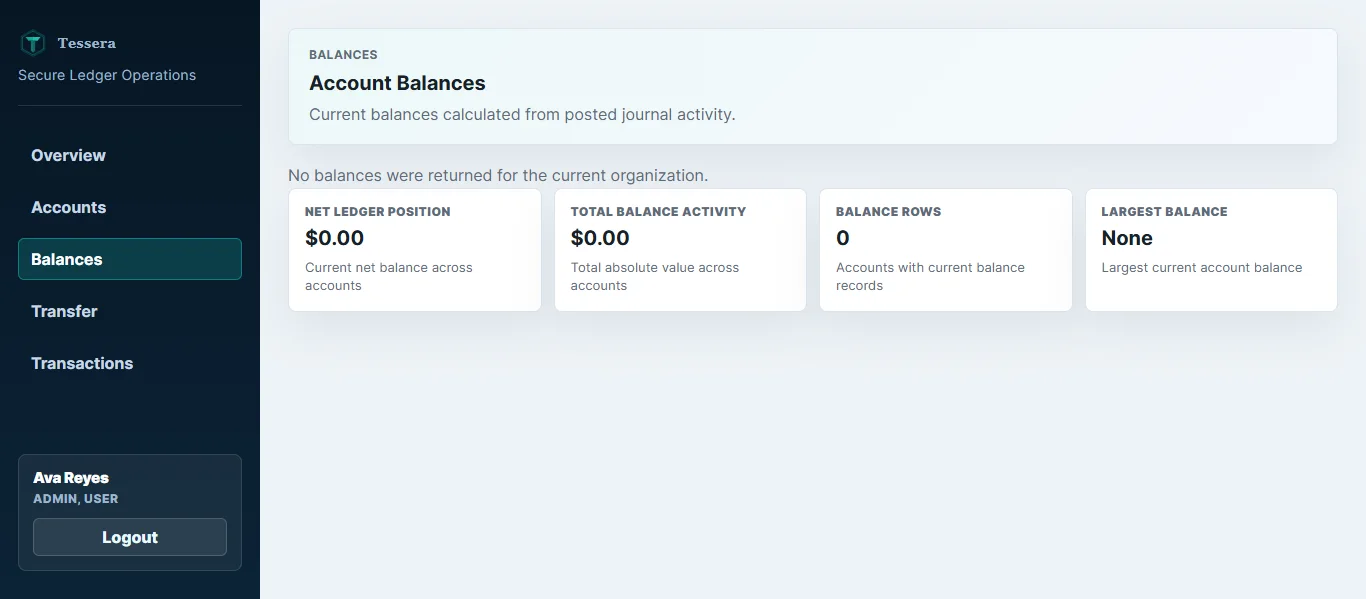
  • Derived balance summary and ledger overview
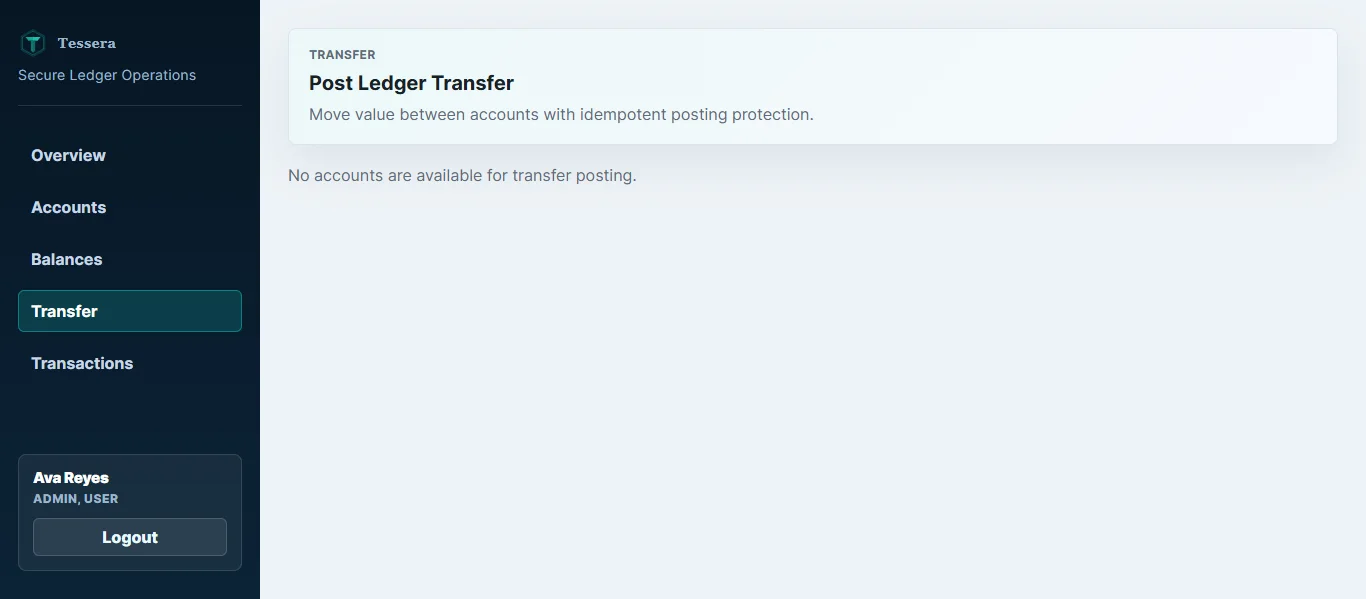
  • Transactional transfer-posting workflow
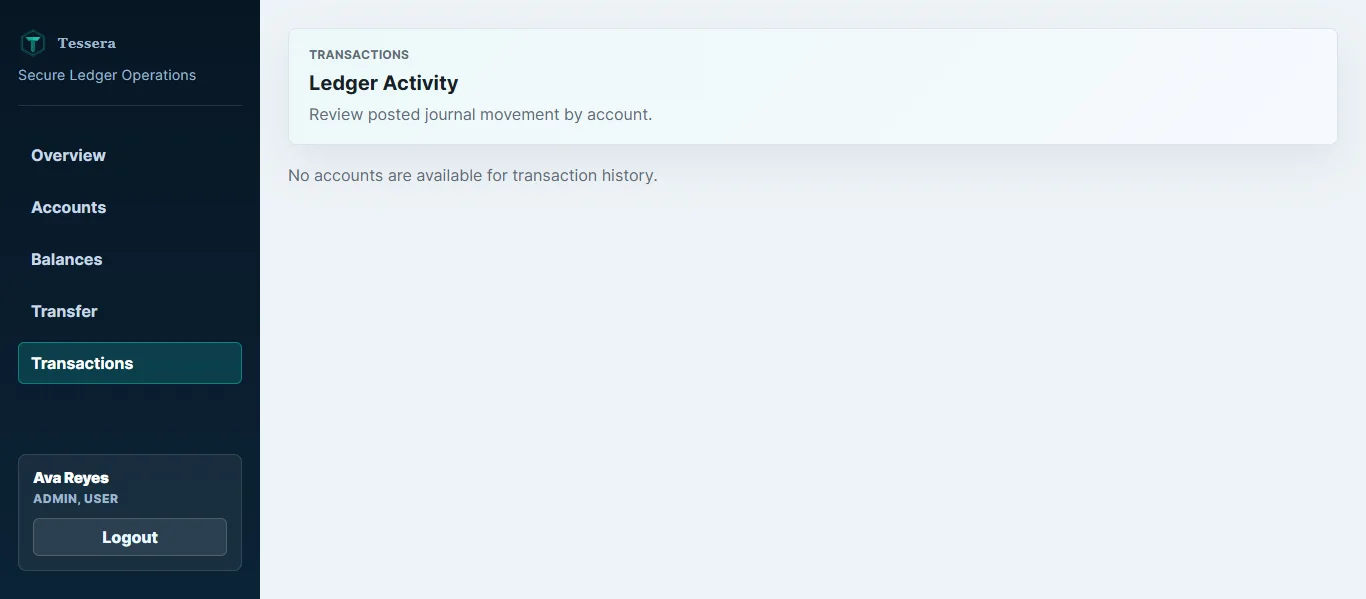
  • Traceable transaction history
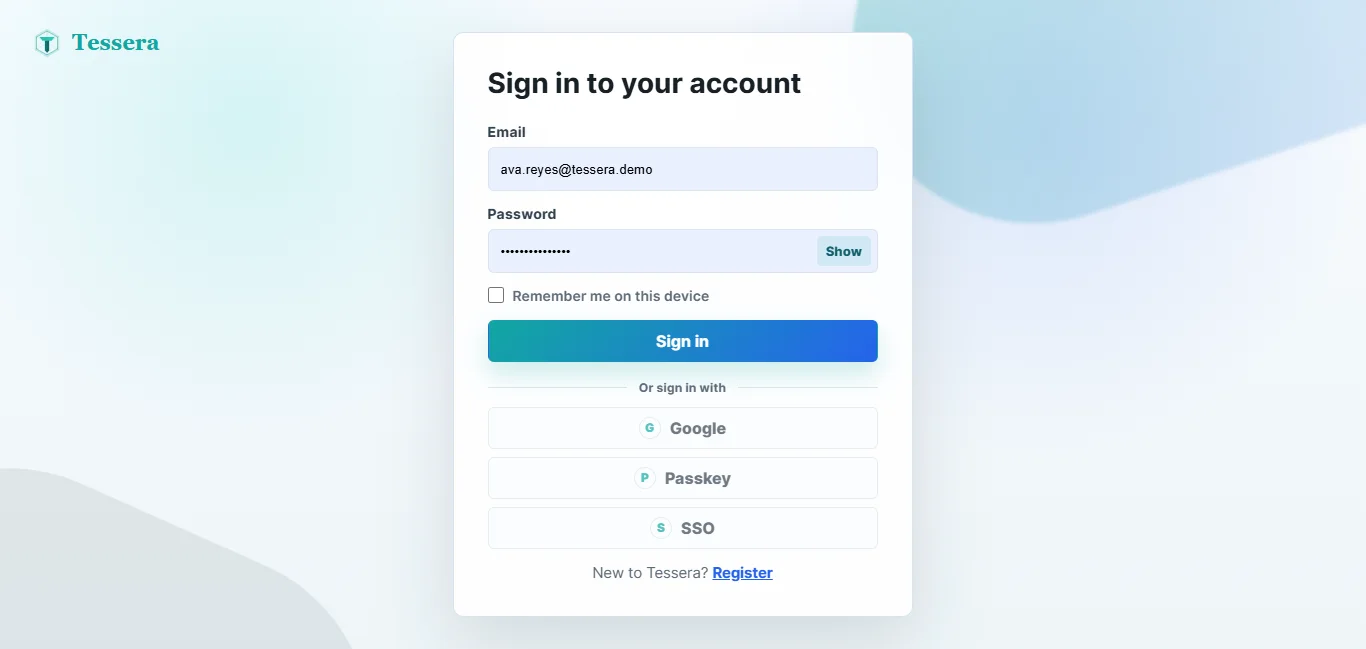
  • Sign-in flow and deterministic empty-state handling
  • Responsive application shell

Core functionality

  • Secure sign-in
  • Organization-scoped workspace
  • Admin and user roles
  • Chart of accounts with asset, liability, and revenue classifications
  • Balance overview calculated from posted journal activity
  • Transfer form with idempotent posting protection
  • Transaction history
  • Current ledger balance and account coverage summaries
  • Session and workspace details

Architecture

How the system was structured

The platform was structured around explicit ledger domain rules, organization-scoped data access, transactional posting, derived balances, idempotent write protection, and role-aware authorization.

  • TypeScript application with a PostgreSQL ledger model
  • Multi-tenant architecture and organization-scoped queries
  • Server-side role-based authorization
  • Explicit account model and journal-based transaction records
  • Balances derived from posted journal lines
  • Transactional transfer posting with idempotency protection
  • Authenticated application shell
  • Deterministic empty-state behavior and audit-oriented history

Decisions

Key decisions

These choices shaped the build around the workflow problem instead of adding features for their own sake.

  • Modeled ledger operations explicitly instead of treating transfers as simple balance mutations.
  • Derived balances from posted journal activity.
  • Scoped account and transaction access by organization.
  • Used transactional posting behavior and idempotency protection for retries.
  • Kept role checks separate from interface visibility.
  • Made empty-state behavior deterministic.
  • Avoided presenting the platform as a bank, payment processor, or regulated accounting product.

Outcome

What changed

The portfolio application establishes clear ledger boundaries for organization-scoped accounts, derived balances, transactional transfers, and traceable journal activity.

  • Clearer ledger domain boundaries
  • Traceable account and transaction history
  • Stronger tenant isolation
  • Safer transfer-posting behavior
  • More reliable balance visibility
  • A production-oriented foundation for financial workflows

Portfolio application: The captured interface demonstrates the workflow structure and deterministic empty states; seeded data screenshots would provide stronger proof of account, balance, transfer, and transaction behavior.

Explore financial operations and ledger systems

Buyer trust

What this demonstrates

  • Multi-tenant architecture and financial domain modeling
  • Transactional integrity and idempotency
  • Server-side authorization
  • Derived state and audit-friendly history
  • Failure-aware backend design
  • Production-grade system thinking

Next step

Working through a similar workflow problem?

Start with the current process, where it breaks down, and what should be better after the first phase.